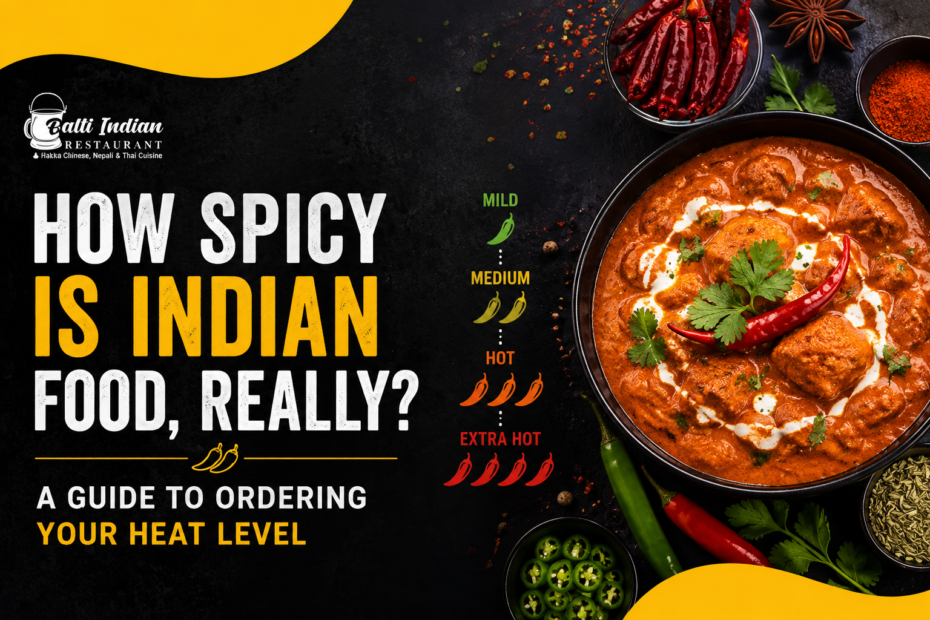
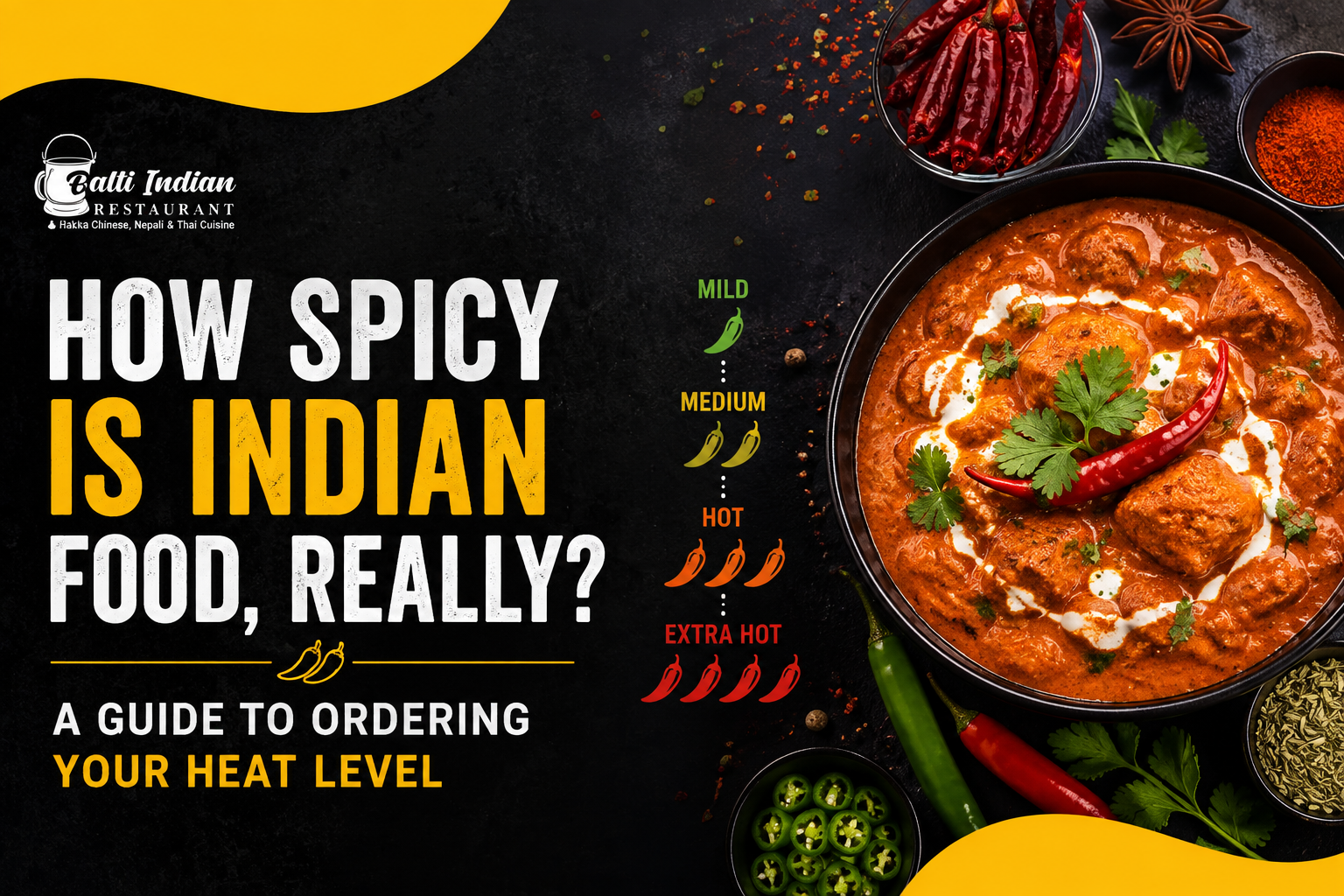
“Is Indian food spicy?” is one of the most common questions asked before someone’s first visit to an Indian restaurant — and the honest answer is: it depends entirely on what you order. Indian cuisine spans everything from mild, creamy curries to genuinely fiery regional dishes, often on the very same menu. Here’s how to understand spice level before you order, so nothing catches you off guard.
Every dish, made to your spice level
At Balti Indian, our kitchen can adjust spice level on request at all three Ontario locations — just ask your server.
Spice and Heat Are Not the Same Thing
This is the biggest misconception about Indian food. “Spiced” refers to the use of spices for flavour — cumin, coriander, turmeric, cardamom — most of which add depth and warmth, not heat. “Spicy” or “hot” refers specifically to chilli content. A dish can be heavily spiced and still be completely mild, and that describes a large share of what’s on an Indian menu.
What Actually Makes a Dish Hot
Heat comes almost entirely from chillies — fresh green chilli, dried red chilli, or chilli powder — and from black pepper in smaller amounts. The amount used, and when it’s added during cooking, determines how hot the final dish tastes. Restaurants generally have control over this, which is why asking for a dish “mild” or “less spicy” is a completely normal and expected request.
The Indian Food Spice Scale, Roughly Mapped
Mild
Butter chicken, korma, and most paneer dishes fall here. Rich, warmly spiced, and safe for anyone who wants big flavour without heat.
Medium
Chicken tikka masala, saag dishes, and most dal fall in the middle — noticeable warmth, but not overwhelming for most diners.
Hot
Madras-style curries bring a firm, steady heat built into the sauce itself.
Very Hot
Vindaloo is the benchmark for genuine heat on most Indian menus — sharp, chilli-forward, and not for the faint of heart.
How to Order If You’re Not Sure of Your Tolerance
- Say so when ordering — “mild,” “medium,” or “not too spicy” are normal requests that kitchens are used to hearing
- Start with butter chicken or korma if this is your first visit
- Order rice or naan alongside anything spicier, since both help balance heat
- Keep yogurt-based sides like raita on the table — dairy cuts heat far more effectively than water
If You Actually Want the Heat
For diners who want real heat, vindaloo and madras-style dishes are the ones to ask about, and most kitchens can push the chilli level even higher on request. It’s worth telling your server you want it “hot” rather than the standard preparation — the default spice level on a menu is usually calibrated for a broad audience, not the most heat-tolerant guest.
We’ll Adjust It for You
Whether you want something gentle for a first visit or you’re chasing real heat, our kitchen can adjust spice level on almost any dish. Just let your server know when you order at any of our three Ontario locations.
Frequently Asked Questions
What’s the mildest dish on an Indian menu?
Butter chicken and korma are typically the mildest options, offering rich flavour with very little heat.
Can I ask for a dish to be made less spicy?
Yes. Most Indian kitchens, including ours, can adjust the chilli level on request — just mention it when you order.
What helps if a dish is too spicy?
Dairy-based sides like raita or lassi neutralize heat far better than water. Plain rice or naan also helps balance a spicy dish.