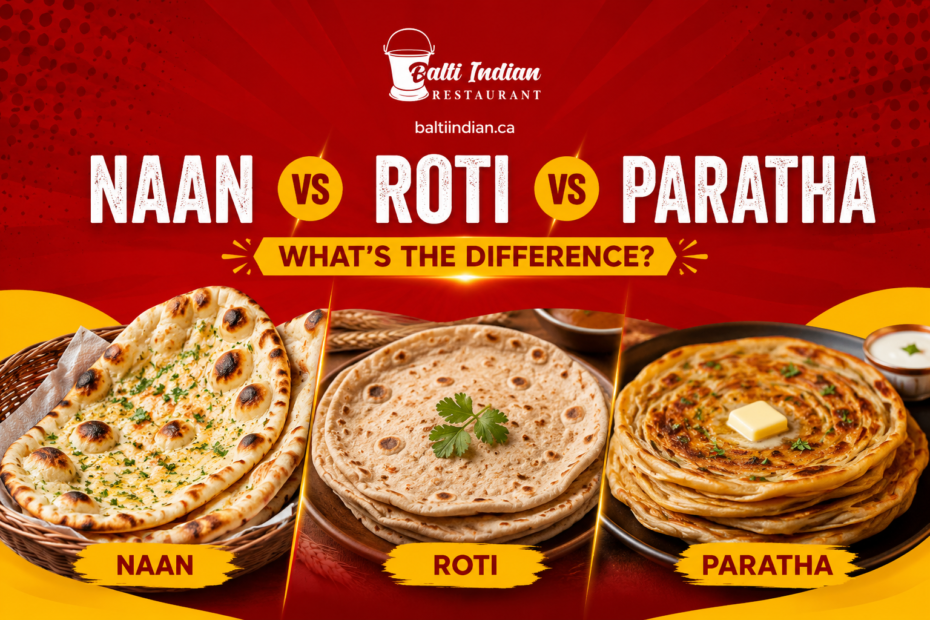
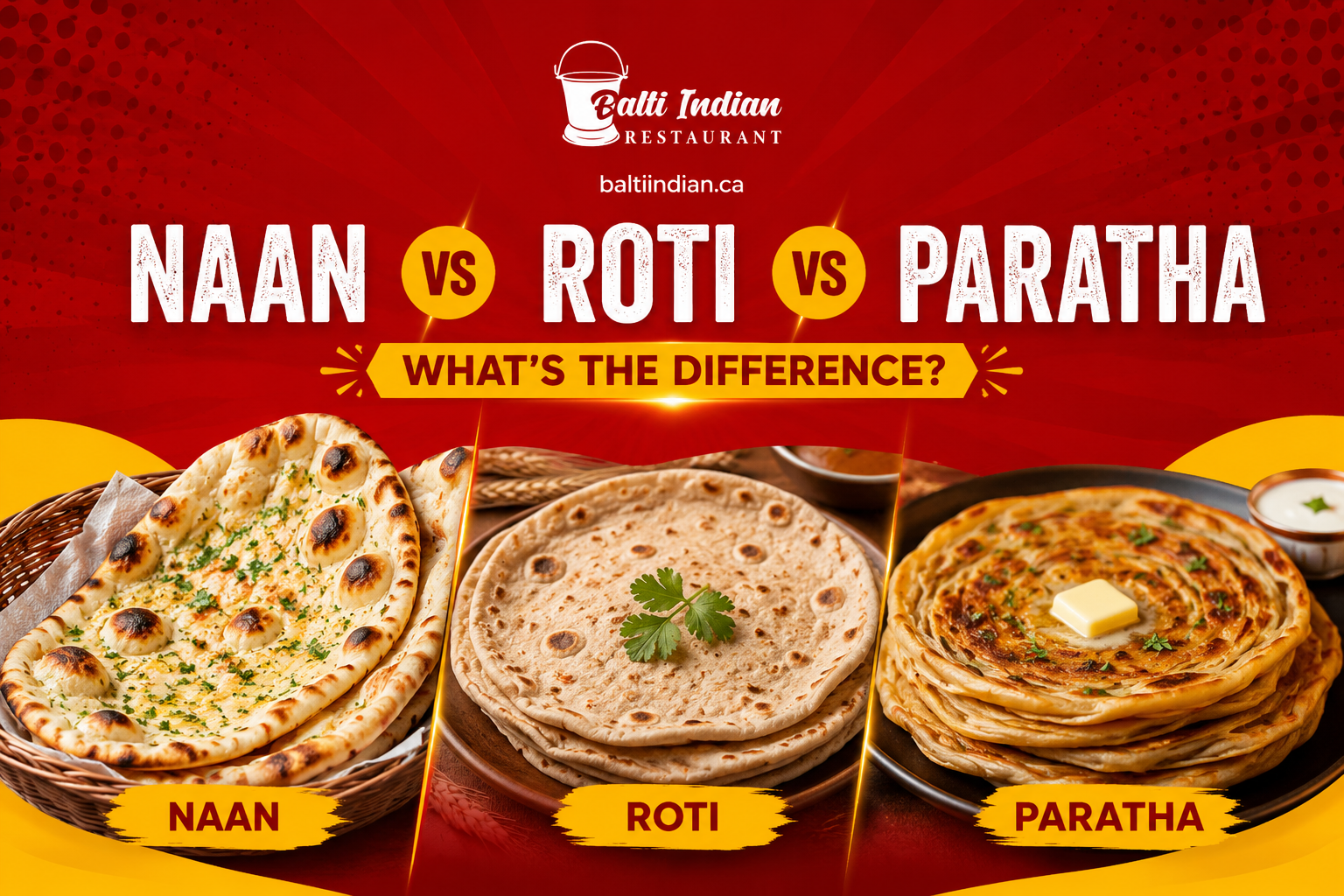
Every Indian menu has a bread section, and most diners default to the same choice every time without knowing what actually separates naan from roti from paratha. They look similar on the table, but the dough, the cooking method and the texture are all different — and knowing the difference changes what you order them with.
Fresh bread, made to order
Balti Indian Restaurant cooks naan fresh in a traditional clay tandoor at all three Ontario locations.
The Short Version
Naan is leavened and cooked in a tandoor, giving it a soft, pillowy texture with a charred exterior. Roti is unleavened and cooked on a flat griddle, making it thinner and denser. Paratha is also unleavened but layered with fat and pan-fried, giving it a flaky, richer texture than either naan or roti. Same basic ingredients — flour, water, salt — three very different results depending on the fat, the leavening, and the cooking method.
Naan: Soft, Chewy, Tandoor-Cooked
Naan dough is leavened, typically with yeast or yogurt, which gives it its signature soft, chewy texture. It’s slapped onto the inner wall of a hot clay tandoor, where it sticks and puffs as it cooks. The high, dry heat chars the surface while the inside stays soft — the same principle that makes tandoori meat taste the way it does.
- Plain naan: Simple, soft, and the most common order — great for scooping up rich curries.
- Garlic naan: Brushed with garlic and butter or oil before serving.
- Butter naan: Finished with a generous brush of ghee or butter after cooking.
- Stuffed naan (kulcha-style): Filled with paneer, potato, or onion before cooking.
Roti: Thin, Unleavened, Everyday Bread
Roti (also called chapati) is made from whole wheat flour and water, with no leavening agent. It’s rolled thin and cooked directly on a flat griddle called a tawa, sometimes finished briefly over an open flame to puff it up. Roti is the everyday bread in most Indian households — lighter and less rich than naan, and often the healthier choice on a menu since it’s typically cooked with little to no added fat.
Paratha: Layered, Flaky, Pan-Fried
Paratha starts similarly to roti but the dough is folded with ghee or oil between layers before being rolled out and pan-fried on the tawa. The layering and fat create a flaky, almost pastry-like texture. Paratha can also be stuffed — with spiced potato (aloo paratha), paneer, or vegetables — turning it from a side into something closer to a meal on its own.
Which Bread Should You Order?
It depends on what’s on the rest of the table:
- Rich, creamy curries (butter chicken, korma) — naan holds up well and complements the sauce.
- Lighter meals or lentil dishes (dal, saag) — roti is the traditional, lighter pairing.
- Ordering bread as more of a meal — a stuffed paratha can stand on its own with just a side of yogurt or pickle.
Fresh Bread at Balti Indian
Our naan is cooked to order in a traditional clay tandoor at all three locations, so it arrives hot, blistered, and fresh off the oven wall — not reheated. Ask your server which bread pairs best with what you’ve ordered if you’re not sure.
Frequently Asked Questions
Is naan or roti healthier?
Roti is generally lighter since it’s unleavened and cooked with little to no added fat, while naan often includes yogurt or butter and is richer as a result.
Can paratha be ordered plain?
Yes, plain paratha is available, though stuffed versions like aloo paratha are a popular way to turn it into a more filling dish.
Why does naan taste different at a restaurant than at home?
Restaurant naan is typically cooked in a real clay tandoor at very high heat, producing the char and puff that’s difficult to replicate in a home oven.