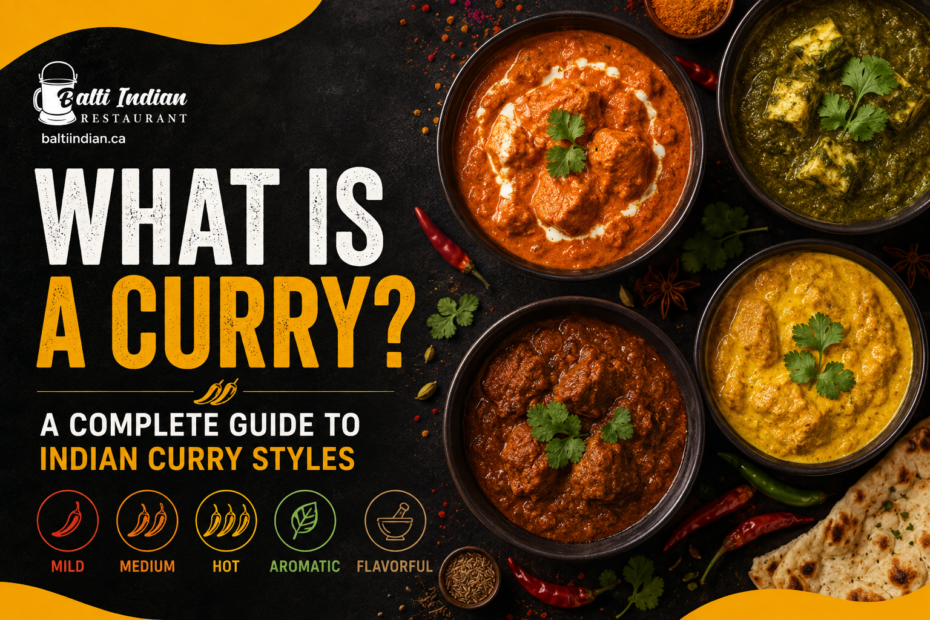
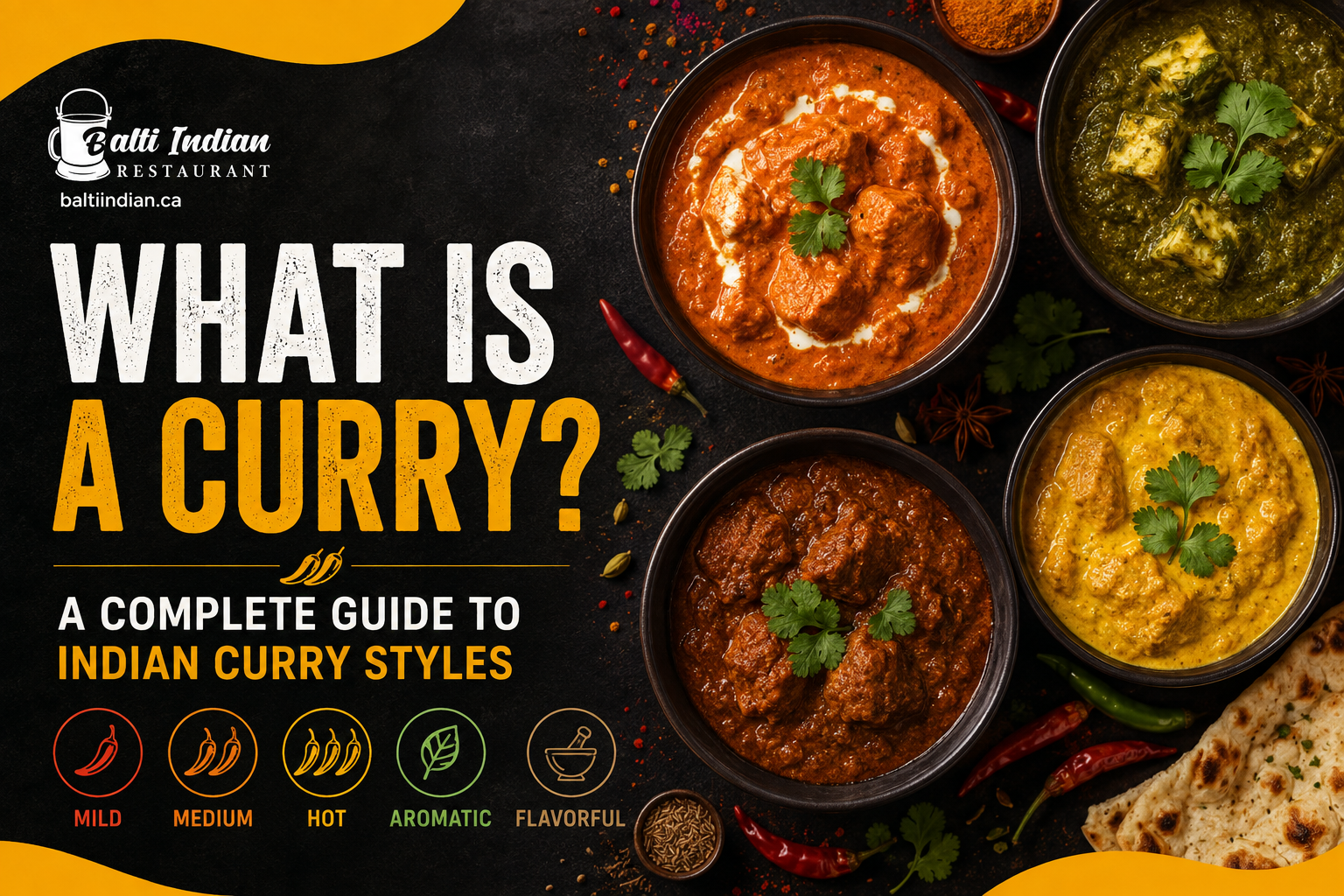
Ask ten people what a curry actually is, and most will describe a single dish — usually something orange-red in a bowl. But “curry” is not one recipe. It is a category, covering hundreds of regional preparations across India that share a technique more than a taste. Understanding that technique makes it much easier to know what to order, and why two curries on the same menu can taste nothing alike.
A full range of curries, made fresh daily
Balti Indian Restaurant prepares curries from scratch at all three Ontario locations, from mild butter chicken to fiery vindaloo.
So What Actually Makes Something a “Curry”?
At its core, a curry is a dish built around a spiced sauce or gravy, usually starting with a base of onion, garlic, ginger and tomato, cooked down and layered with whole and ground spices. The word itself is an English simplification — in India, each region has its own name for its own style of sauce-based dish. What unites them isn’t a specific spice blend, it’s the method: building flavour in stages, rather than seasoning a finished dish at the end.
Why Curries Taste So Different From One Another
Three variables account for almost all the difference between one curry and the next:
- The base: Onion-tomato, yogurt-based, coconut-based, or cream-finished — the base decides whether a curry is tangy, rich, or light.
- The spice layering: Whole spices bloomed in oil first, then ground spices added later, then a finishing garnish like garam masala — the order changes the depth of flavour.
- The regional influence: North Indian curries lean rich and creamy; South Indian curries lean toward coconut and tamarind; Punjabi curries lean toward butter and tomato.
Curries to Know on an Indian Menu
Butter Chicken (Murgh Makhani)
Tandoori chicken simmered in a tomato-butter-cream sauce. Mild, rich, and the most ordered curry in North America for a reason — it is an easy entry point for anyone new to Indian food.
Chicken Tikka Masala
Similar in spirit to butter chicken but with a more pronounced spice profile and less sweetness. Grilled tikka pieces finished in a spiced tomato-cream sauce.
Korma
A mild, nut-and-yogurt or cream-based curry, sometimes finished with cashew paste. One of the gentlest curries on any menu, with warmth from spice rather than heat.
Saag
A spinach-based curry, often paired with chicken (saag chicken) or paneer (saag paneer). Earthy and mildly spiced, with a distinct green colour and iron-rich flavour.
Vindaloo
A Goan curry with Portuguese roots, built on vinegar, garlic and dried red chillies. This is the heat-forward end of the curry spectrum — sharp, tangy, and genuinely spicy.
Madras
A South Indian-style curry, tomato-based with a firm chilli kick. Less tangy than vindaloo, but still solidly in the “hot” category on most menus.
How to Pick a Curry If You’ve Never Ordered One
If you’re not sure where to start, work from mild to bold: butter chicken or korma first, saag or tikka masala next, and madras or vindaloo once you know your tolerance. Pair whatever you order with plain rice or naan to balance the sauce, and don’t be afraid to ask your server where a dish sits on the spice scale — it varies more than the menu description usually lets on.
Order Curry at Balti Indian
Every curry on our menu is made fresh, from the spice blend to the simmer. Whether you’re after something mild and comforting or something with real heat, our team can help you find the right dish at any of our three Ontario locations.
Frequently Asked Questions
Is curry always spicy?
No. Curry refers to a spiced sauce-based dish, not a heat level. Dishes like korma and butter chicken are mild, while vindaloo and madras are genuinely hot.
What’s the mildest curry to start with?
Butter chicken and korma are the two gentlest options on most menus — rich and warmly spiced rather than hot.
Can curries be made vegetarian?
Yes. Paneer, chickpeas (chana), lentils (dal) and vegetables can all be prepared in the same curry bases as meat dishes, including saag paneer and chana masala.